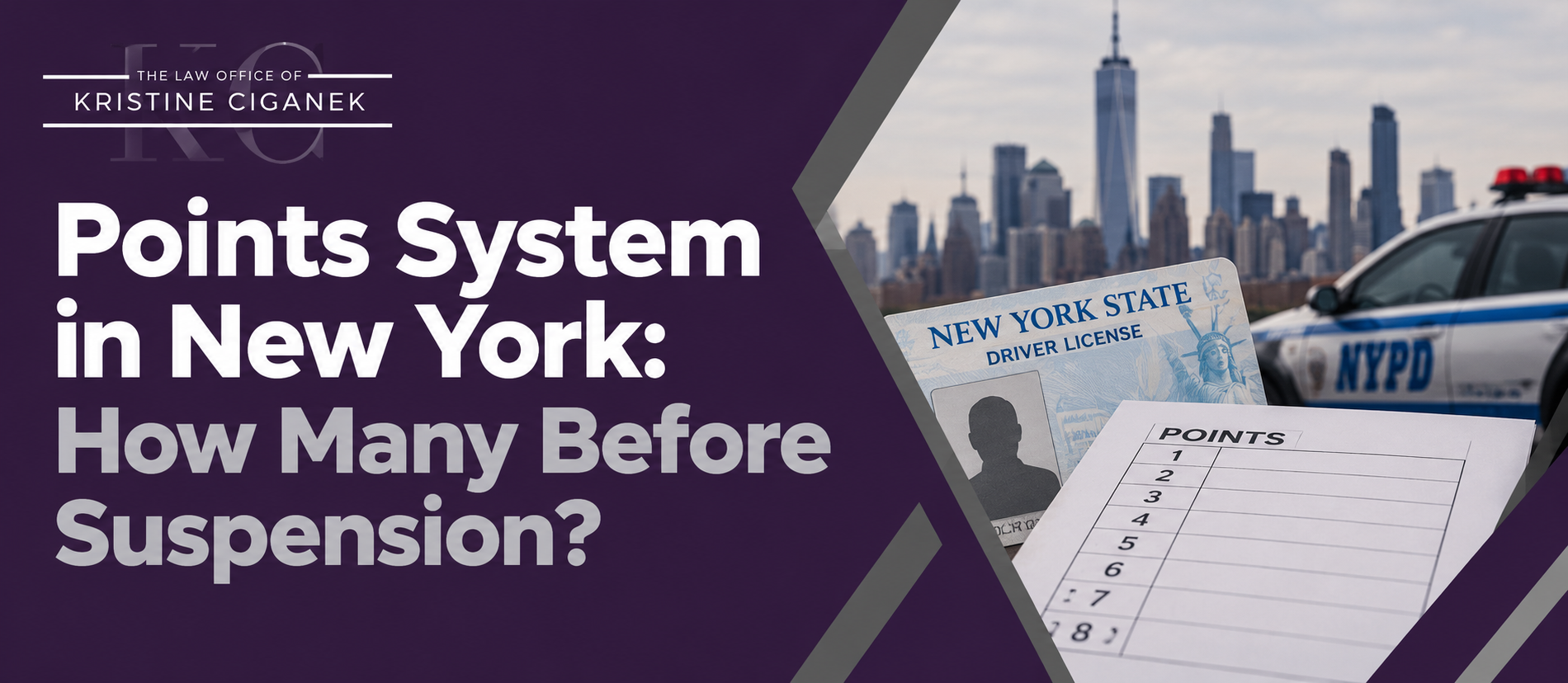
Points System in New York: How Many Before Suspension?
If you've gotten a few tickets in New York, you've probably heard people talk about "points" without really knowing what that means for your license. Here's the short version: New York uses a point system to track traffic violations, and once you hit a certain number, the DMV can suspend your license entirely. If you're trying to figure out where you stand, or you're worried a ticket might push you over the edge, here's exactly how the system works.
How the Points Actually Add Up
Moving violations, meaning tickets you get while your vehicle is in motion, come with a set number of points once you're convicted. Non-moving violations, like parking in a no-parking zone, an unregistered vehicle, or broken lights, don't add points. That doesn't make them harmless, since fines and other penalties can still apply. Speeding tickets are the most common way people rack up points, and the number scales directly with how fast you were going over the limit:
1–10 mph over: 3 points
11–20 mph over: 4 points
21–30 mph over: 6 points
31–40 mph over: 8 points
41+ mph over: 11 points
Notice how quickly that adds up. A single ticket for going 55 in a 20 could put 8 points on your record by itself - more than half the threshold for suspension from just one conviction. And that's before factoring in anything else already sitting on your record.
Speeding isn't the only way to get points. Failing to stop at a red light is 3 points, and using a handheld phone while driving is 5 points on a first offense. Move Over law violations (VTL 1144) also put points on your license. Those tickets are climbing fast: New York State Police issued more than 14,700 in 2024, and more than 11,600 had already been issued by September 1, 2025. Since the law was expanded in 2023, you have to move over or slow down for any vehicle stopped on the side of the road, not just emergency vehicles.
The Magic Number: 11 Points
Under the NY DMV points system, once you hit 11 or more points, the DMV can suspend your license. That's the number that matters most when it comes to NY license suspension points, especially if you're trying to figure out how much room you have left before things get serious. Because speeding tickets carry some of the heaviest point values on the chart, they're often the type of conviction that pushes drivers over that line - sometimes without the driver even realizing how close they were.
It's also worth knowing this isn't just about one bad ticket. Points from multiple violations stack together over time. Two moderate speeding tickets close together can land you at 11+ points just as easily as one severe one, which is why even a "minor" ticket is worth taking seriously if you already have points on your record.
The Driver Responsibility Assessment: A Separate Cost You'll Face First
Before you even reach the suspension threshold, there's another financial hit worth knowing about - the Driver Responsibility Assessment (DRA). This kicks in once you hit 6 or more points within an 18-month period, and it's completely separate from any court fines or fees you've already paid.
Here's how the DRA breaks down:
6 points: $300 total, billed as $100 per year for three years
Each additional point past 6: An extra $75, also spread over three years
DUI or driving without insurance: $750 total, billed at $250 per year for three years, regardless of point count
This applies whether you're a New York resident or an out-of-state driver who picked up a violation while passing through New York. And skipping the payment isn't a real option - the DMV can suspend your driving privileges in New York until it's paid in full, and because many states share information with each other, that suspension can sometimes follow you into your home state as well.
What Happens If You Get Caught Driving on a Suspended License
Once your license is actually suspended - whether from points, a DRA non-payment, ignoring a ticket and failing to appear in court, or something else entirely - driving anyway is treated as a real criminal matter in New York, not just another traffic ticket. There are three degrees of this offense, and the consequences escalate quickly:
Third degree (a misdemeanor) applies when someone drives knowing, or having reason to know, that their license is suspended or revoked. This carries a fine between $200 and $500 and up to 30 days in jail.
Second degree (also a misdemeanor) usually applies when the suspension was tied to a DWI or when a driver has three or more suspensions from separate dates for failing to appear in court or pay a fine. Penalties jump to a fine of $500 to $1,000, up to 180 days in jail, and/or up to 3 years of probation.
First degree is a felony - specifically when someone drives on a suspended or revoked license while also intoxicated or impaired. This carries a fine of $500 to $5,000, up to 4 years in state prison, and/or 5 years of probation.
That's a significant jump in consequences from one degree to the next, which is exactly why it's worth taking a suspension seriously the moment it happens instead of waiting to see what happens if you keep driving anyway. You can find a fuller breakdown of these penalties on our Rockland County Suspended License page.
Ways to Keep Points Off Your Record
The best strategy is avoiding points in the first place, and there are a few real options worth knowing about:
Fight the ticket: A conviction is what actually puts points on your record - not just getting pulled over. Contesting a ticket can sometimes result in a reduced charge or an outright dismissal, which keeps the points, or at least some of them, off your record entirely. Most tickets can be defended, for example, when the ticket has wrong or missing information, signs or road markings are unclear, you have photo or witness evidence, or the officer made a procedural error during the stop. You usually have 15 to 30 days to respond, and ignoring the ticket can lead to late fees, a license suspension for failure to appear, and a registration hold.
Take a defensive driving course: New York allows drivers to reduce up to 4 points off their record by completing a DMV-approved defensive driving course. If you're sitting close to a threshold - either the 6-point DRA trigger or the 11-point suspension line - this can genuinely make the difference.
Negotiate the charge: In some cases, working out a plea to a lesser violation means fewer points than what the original ticket would have carried, even when the ticket itself doesn't get fully dismissed. One common goal is getting a moving violation reduced to a non-moving violation, which carries no points.
Why It's Worth Talking to an Attorney Before Points Pile Up
Every point matters more than most people realize until they're staring down an actual suspension letter. If you've got a ticket working its way through the system right now, or you're already sitting close to the 11-point line, getting ahead of it - rather than waiting to see what the DMV decides - is almost always the better move.
An experienced traffic attorney can look at your specific driving record, tell you exactly where you stand, and figure out whether fighting the ticket, negotiating it down, or taking a defensive driving course makes the most sense for your particular situation. An attorney can also enter your not guilty plea, request a supporting deposition from the officer, and appear in court for you. That kind of guidance matters even more if you're already facing a suspension, since driving on one - even by accident - carries real criminal consequences, as outlined above.
If you're already facing a suspension, worried you're getting close to one, or you've received a ticket that could push you over the edge, don't wait until it becomes a much bigger problem. Learn more about what a suspension actually means for you on our Rockland County Suspended License Lawyer page, or reach out directly to talk through your specific record and options.